
-
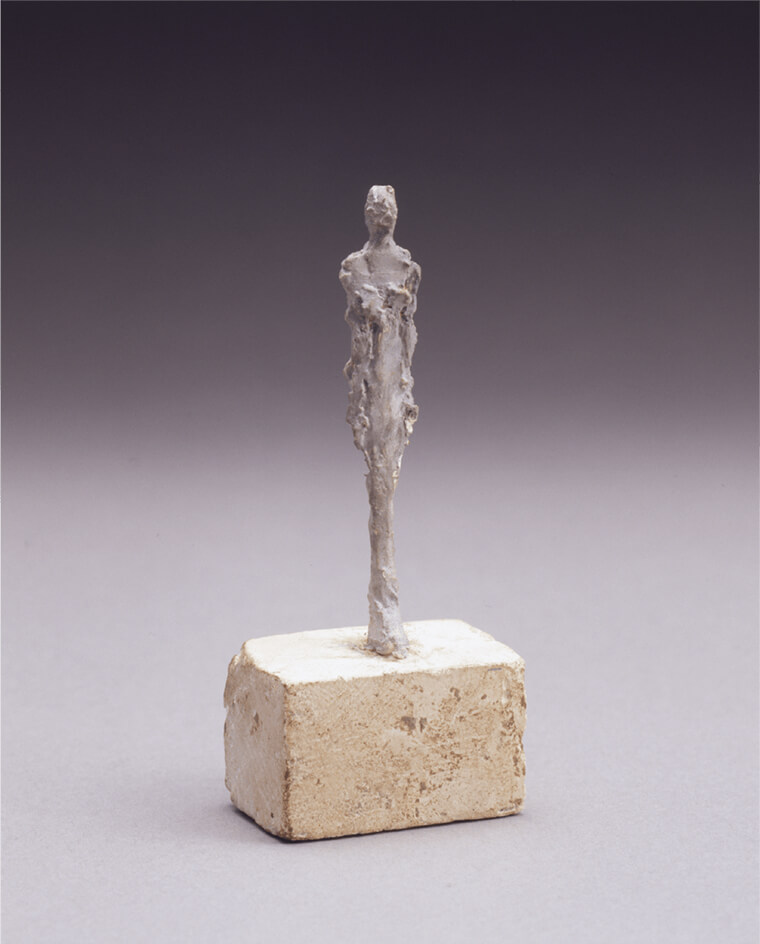 Alberto Giacometti, Small Standing Nude,
c. 1946, Painted plaster, 8.9×3.7×2.3㎝,
The Museum of Modern Art, Kamakura & Hayama,
Photo: Moriyoshi Sugaya -
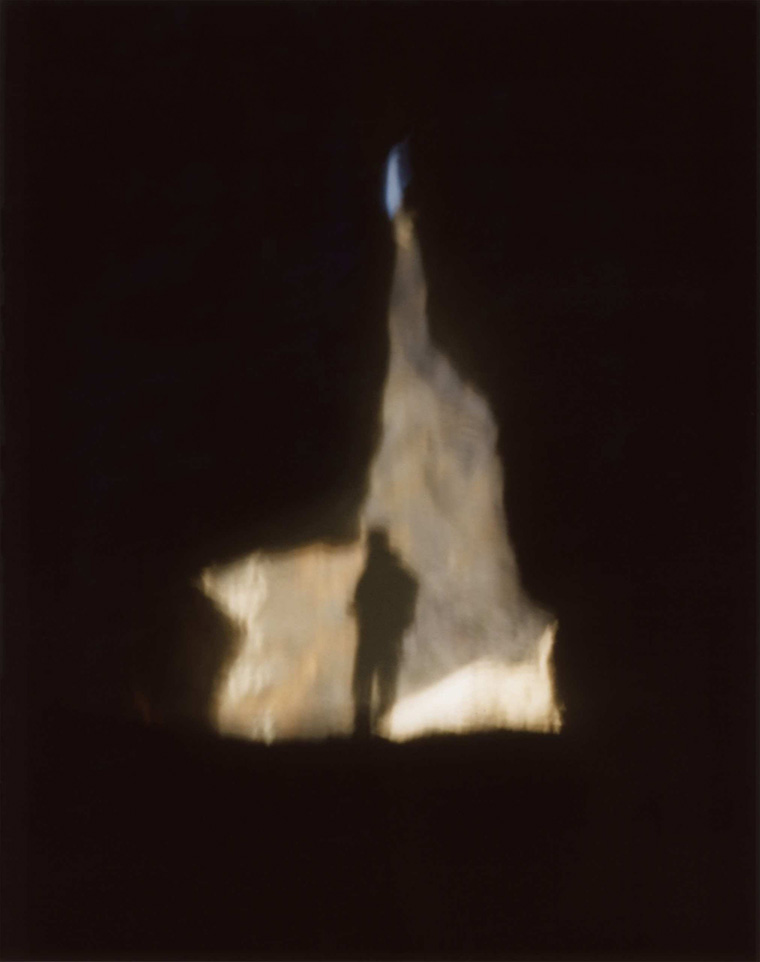 Momo Yamanishi, From The Light/Mustang, 2023
Collection of the Artist -
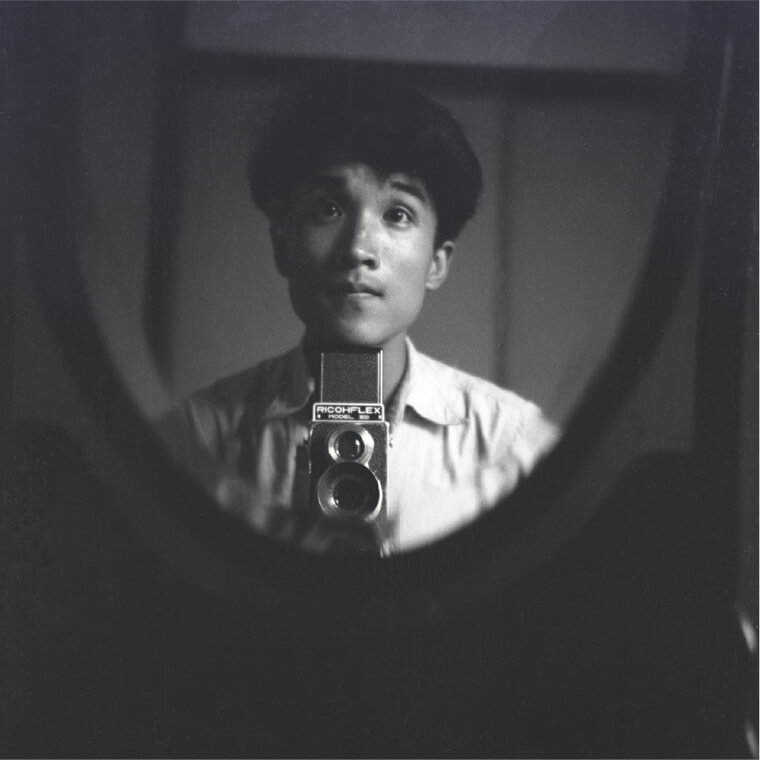 Shuntaro Tanikawa, Self-portrait, 1951,
Gelatin silver print, 17.3×17.3㎝
Shuntaro Tanikawa Office, Inc. -
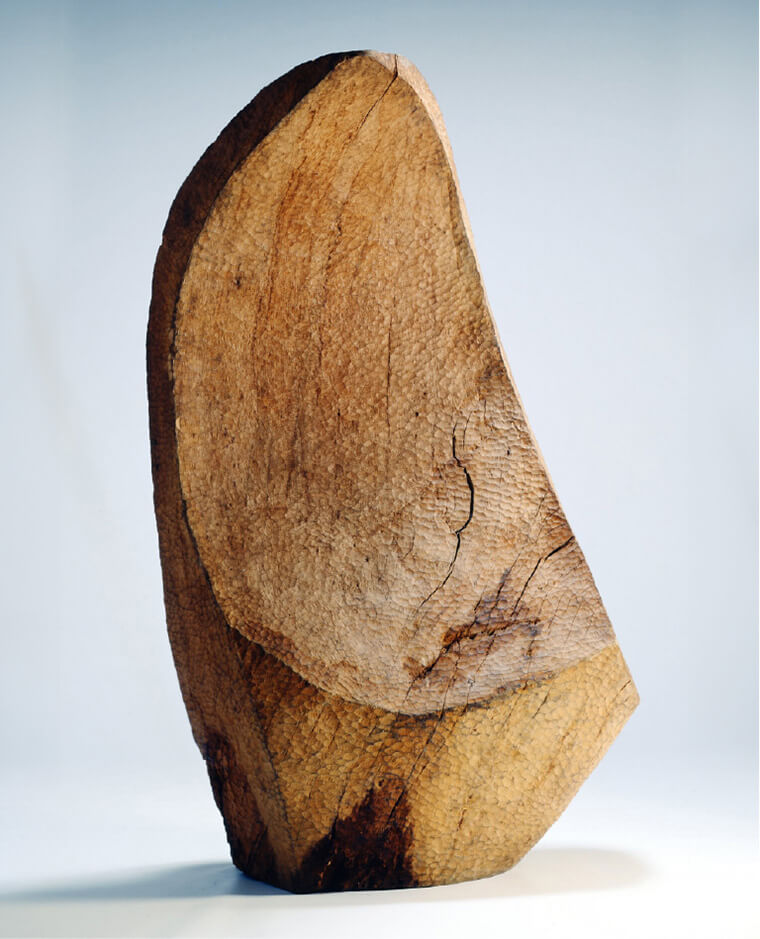 Bikky Sunazawa, God’s Tongue, 1980, Oak
203×120×60㎝, Sapporo Art Museum,
Photo: Masahide Sato -
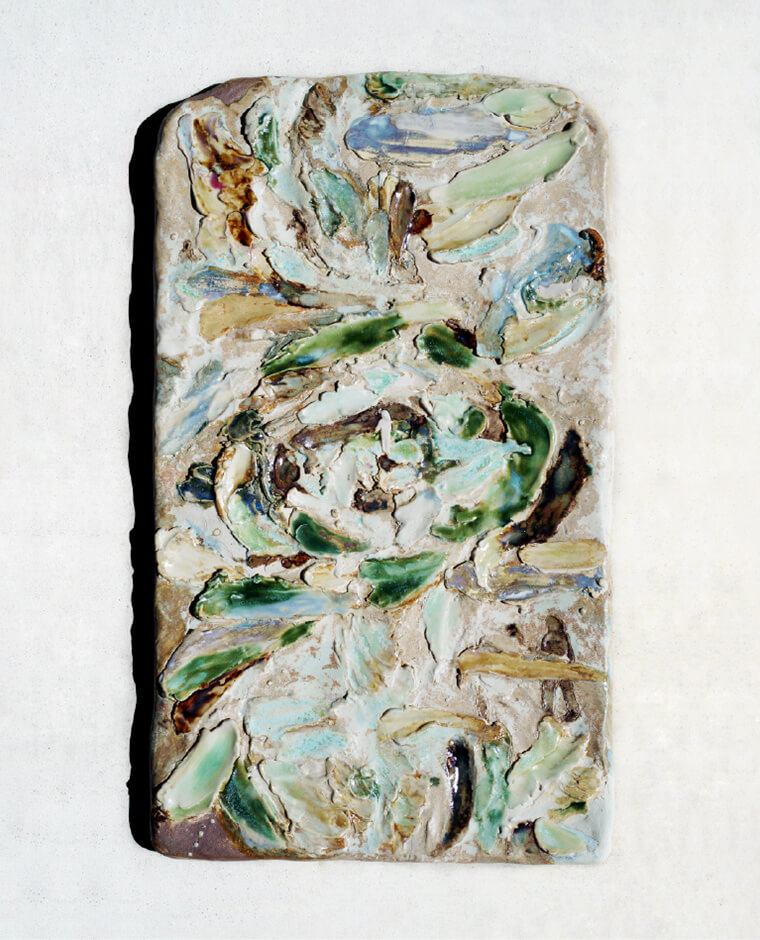 Elena Tutatchikova, Timelines #3, 2025-26,
Ceramic porcelain, glaze, slip, terra sigillata
61.4×35.5×3㎝, Collection of the Artist
Photo: Elena Tutatchikova













Exhibition
What kind of dialogue with the world is possible through art?
Established in May 1926 as Japan’s first public art museum, the Tokyo Metropolitan Art Museum marks its 100th anniversary in 2026. To commemorate this milestone, this exhibition takes “Dialogue with the World” as its central theme, grounded in the Tokyo Metropolitan Art Museum’s mission of creating “a place for creativity and coexistence where people can re-examine themselves and deepen their bonds with the world.”
Reading is an active process: moving toward the unknown, sharpening one’s senses, and deepening one's perception through exploration. Through the works of five artists—Alberto Giacometti, Bikky Sunazawa, Shuntaro Tanikawa, Elena Tutatchikova, and Momo Yamanishi—from disparate eras and artistic practices, viewers will have the opportunity to encounter diverse ways to engage in dialogue with the world: reading through light, reading through time, reading through words, reading through nature, as well as a way of reading that involves imagining with the whole body.
The sculptures, photographs, words, and paintings of these five artists invite a variety of experiences of viewing and engagement. When this happens, one may encounter something that quietly sustains one’s own existence.
The key to opening the door to a new world lies within each individual who connects with the artwork. It would be our greatest pleasure if this exhibition offers an opportunity to experience this for oneself.
Highlights
-
1. An interconnected series of artworks spanning eras and genres
Alberto Giacometti, a master of 20th-century sculpture; Bikky Sunazawa, whose international acclaim has increased in recent years; Shuntaro Tanikawa, one of Japan’s leading poets; Elena Tutatchikova, creator of multilayered works; the up-and-coming Momo Yamanishi—the resonance of their diverse forms of expression fills the exhibition space.
-
2. A theme befitting the museum’s 100th anniversary
This is an apt exhibition theme for the Tokyo Metropolitan Art Museum’s 100-year anniversary and the museum’s mission of creating “a place for creativity and coexistence where people can re-examine themselves, and deepen their bonds with the world.” Through the diverse ways the five exhibiting artists engage in dialogue with the world, this exhibition offers visitors an opportunity to gain fresh perspectives for "reading the world."
-
3. Presentation of new works
All works scheduled to be exhibited by Elena Tutatchikova will present a new body of work, including her ceramic series Islands. Momo Yamanishi’s pinhole photography will center on new works shot in Nepal in December 2025. Yamanishi also plans to unveil new pieces that combine glass with casts of ammonite fossils.
Artists
What follows is an introduction to each display in the same order as the exhibition layout.
1
Reading through Light
Alberto Giacometti (1901–1966)
-
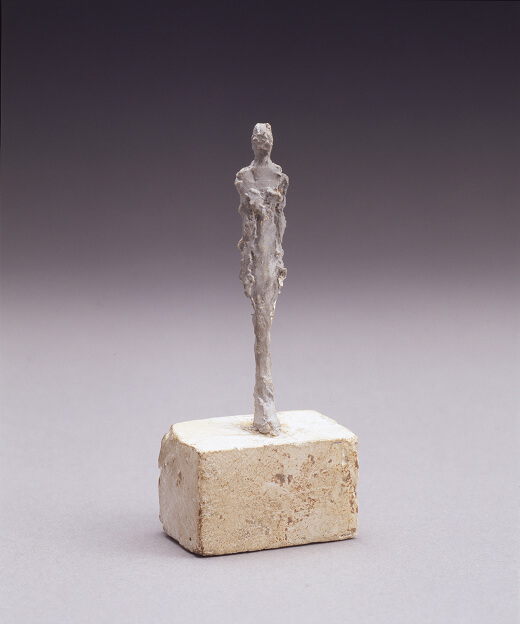 Alberto Giacometti,
Small Standing Nude,
c. 1946, Painted plaster, 8.9×3.7×2.3㎝,
The Museum of Modern Art, Kamakura & Hayama,
Photo: Moriyoshi Sugaya -
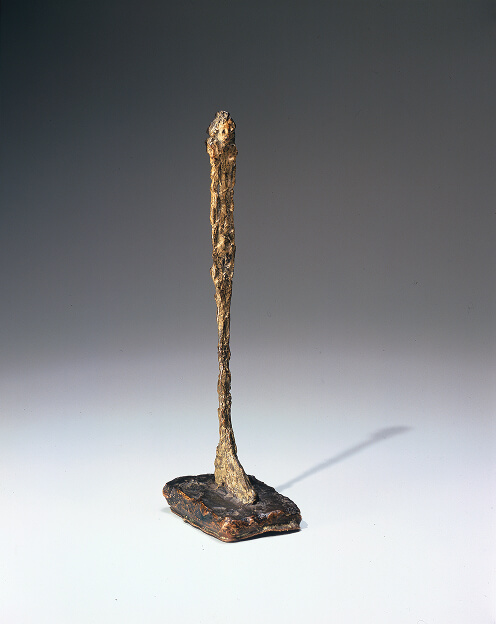 Alberto Giacometti,
Standing Woman,
c. 1950, Painted bronze, 21×5×7.2㎝
Toyama Prefectural Museum of Art and Design
Alberto Giacometti is a sculptor known for his elongated human figures. He believed that his sculptures should be made under the same principles, regardless of their size. Every one of his sculptures undergoes a remarkable transformation depending on the light.
Giacometti’s Paris studio, described as a "nest," was overflowing with plaster debris that narrated the arduous struggle of making. He would create a sculpture and then destroy it in an endless cycle of working and re-working.
Photographer Ernst Scheidegger (1923–2016), who captured Giacometti and his work for over twenty years, spoke of the "play of light" within his plaster sculptures. For Scheidegger, documenting these sculptures as they shifted in the changing light was a source of profound joy.
The words of this photographer, who observed the sculptor and his work for so many years, hold clues that draw us closer to the very heart of creation. If presence is something that transcends verbal explanation, and is instead something that moves and shifts according to the light, then perhaps that "manifestation of light" dwelling within the trembling sculptures was the vivid instant that signaled to Giacometti that he had momentarily reached the end of his work.
Alberto Giacometti
Alberto Giacometti was born in Switzerland and was one of the leading sculptors of the 20th century. Following his involvement with the Surrealist movement, he dedicated his life to exploring an expressive style centered on the theme of existence—most famously represented by his elongated human figures. This display presents works formerly in the collections of his friends Isaku Yanaihara and Eiji Usami.
2
Reading through Time
Momo Yamanishi (1995–)
-
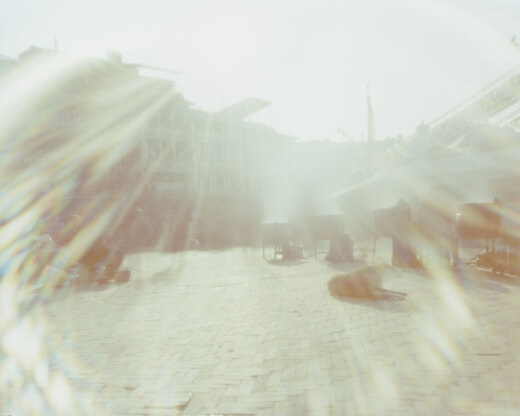 Momo Yamanishi,
From The Light/Mustang, 2025
Chromogenic print, Collection of the Artist -
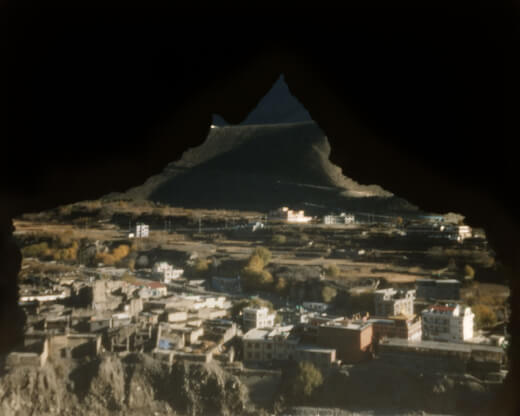 Momo Yamanishi,
From The Light/Mustang, 2025
Chromogenic print, Collection of the Artist
In this section, we present Momo Yamanishi’s works in the same space as Giacometti’s. These photographs, characterized by a soft, diffused glow, were taken in Nepal using a simple pinhole camera that Yamanishi made herself. A small hole made in the camera box captures the light and binds it to the film inside, producing a soft texture that is distinct from the sharpness of a digital image. The inspiration for this body of work came from the numerous caves in Nepal, which evoked associations with pinhole cameras for the artist.
Yamanishi studied metal casting in university. When she discovered an ammonite fossil in Nepal, she intuitively understood it as a “cast of time." The millions of years of natural processes required to produce a fossil resonate with the principles of metal casting, in which molten metal takes on a specific form within a mold. In much the same way, the photographic process, in which light enters a box and forms an image inside, overlaps with these same principles of casting.
A fossil is a living thing that has been transformed into stone; it is essentially different from the ammonite it once was. Likewise, a photograph—a cast of light—is a transformed image that has been created through the effects of time.
Momo Yamanishi
Momo Yamanishi was born in Osaka and studied casting in the Department of Crafts at Tokyo University of the Arts. She received the ZOOMS Japan 2024 Grand Prix for her work combining cast sculptures and pinhole photography, a project inspired by encounters with ammonite fossils and caves in the Himalayan mountains and Upper Mustang region of Nepal in 2024.
3
Reading through Words
Shuntaro Tanikawa (1931–2024)
-
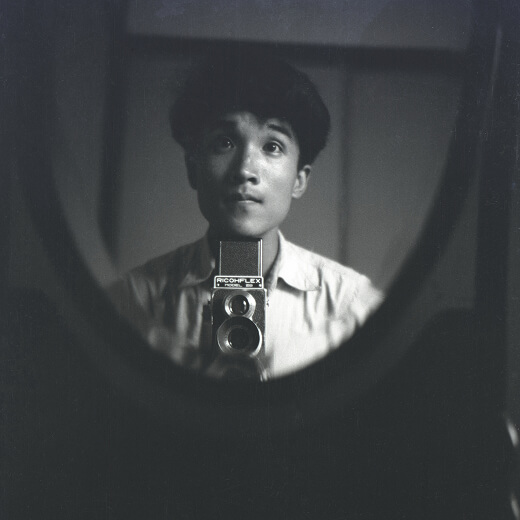 Shuntaro Tanikawa, Self-portrait, 1951,
Gelatin silver print, 17.3×17.3㎝
Shuntaro Tanikawa Office, Inc. -
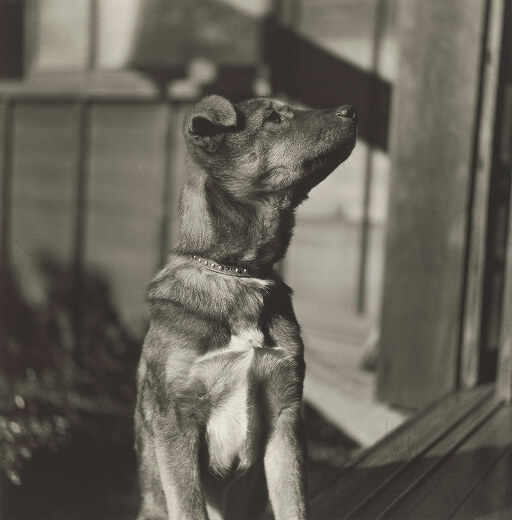 Shuntaro Tanikawa, 1952
Gelatin silver print, 17.3×17.3㎝
Shuntaro Tanikawa Office, Inc.
A young man holds a twin-lens reflex camera, gazing at his own reflection in the mirror. Shuntaro Tanikawa, who would make his debut in 1952 with the poetry collection Two Billion Light Years of Solitude, was nineteen years old at the time. In addition to his poetry, Tanikawa was deeply engrossed in photography during this period.
Friend and poet Makoto Ōoka described Tanikawa’s early poems as “a solitary, yet luminous gaze,” an assessment that could be applied to Tanikawa’s photographs as well.
Alongside poetry and photography, Tanikawa dedicated himself to building radios in his late teens, and would go on to become an avid collector of vintage radios from the West. Throughout his life, Tanikawa remained captivated by the magnetic allure of the radio and its power to transport people into a world of imagination.
When asked what motivated him to write poetry, Tanikawa replied, "Because I want to play with the world—that is, with words." For him, poetry, photography, and his "sound boxes" were all devices to bring the world into focus, and each one was deeply connected to the moment when words emerge. In this section of the exhibition, we follow the poet’s younger days of creation and imagination through his photographs, poems, and his radio collection.
Shuntaro Tanikawa
Shuntaro Tanikawa was born in Tokyo and is considered to be the leading poet of post-war Japan. He made his debut at the age of twenty with the poetry collection Two Billion Light Years of Solitude. In 2023, he presented photographs he took in the early 1950s through both a photobook and an exhibition. This display presents those photographs—including previously unseen images—alongside Tanikawa’s handwritten notebooks from his youth and a collection of radios he once owned.
4
Reading through Nature
Bikky Sunazawa (1931–1989)
-
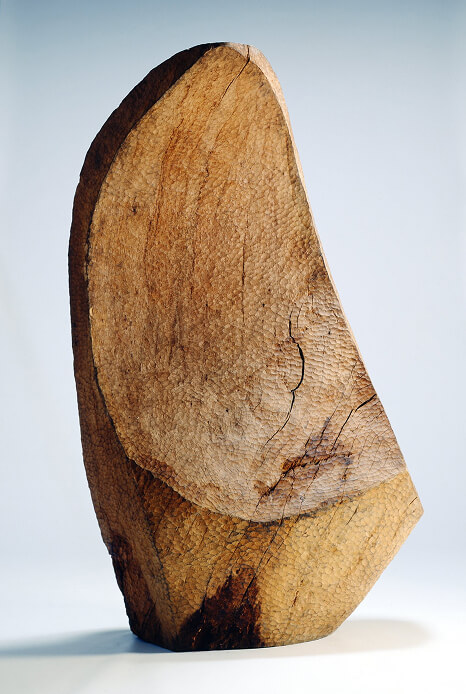 Bikky Sunazawa, God’s Tongue,
1980, Oak
203×120×60㎝,
Sapporo Art Museum,
Photo: Masahide Sato -
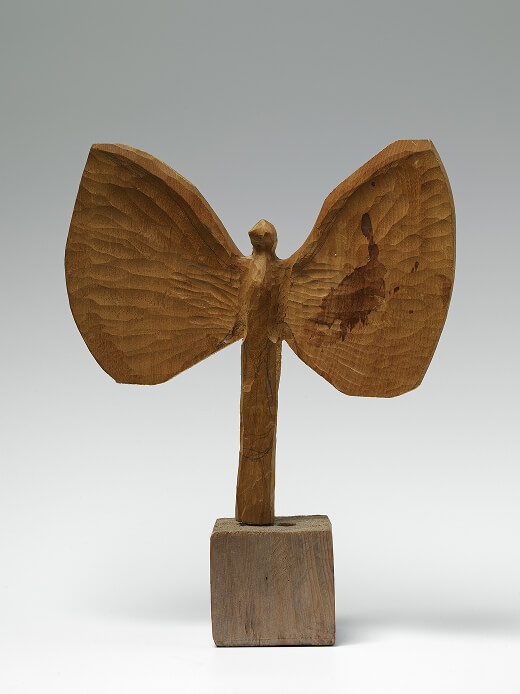 Bikky Sunazawa,
Toy of Three in the Morning (study),
1985, Walnut, castor aralia,
41.5×34×10.2㎝,
The Museum of Modern Art, Kamakura & Hayama
Photo: Tadasu Yamamoto
In the middle of winter, temperatures in the village of Otoineppu in Hokkaido fall to minus thirty degrees Celsius. Nature can feel extraordinarily close when layers of silver snow envelop the world in a penetrating silence.
Bikky Sunazawa turned an abandoned elementary school in this area into a home studio where he brought forth forms through a process akin to fiercely wrestling with the massive trees used in his work. Created through an engagement with a robust “body” that once contained life and its resistance to the chisel, these forms house a faint sense of the sacred.
Sunazawa spoke of art residing within nature, and likewise, of nature residing within art. For this reason, he did not mind if his wood carvings decayed as a result of exposure to wind and snow. Though its physical form may change amidst the relentless cycle of nature, his work is brimming with an unwavering presence.
For Sunazawa, creating sculptures out of wood was a way for him to eliminate the distance between himself and nature. This fierce determination is still evident to this day in the marks of his chisel.
Bikky Sunazawa
Bikky Sunazawa was born in Asahikawa. Basing himself in the village of Otoineppu in Hokkaido, he used enormous trees as material for creating delicate sculptures that overflowed with incomparable vitality. This display centers on the work he made in Otoineppu combined with sculptures and paintings from private collections that will be shown in Tokyo for the first time.
5
Imagining with the Whole Body
Elena Tutatchikova (1984–)
-
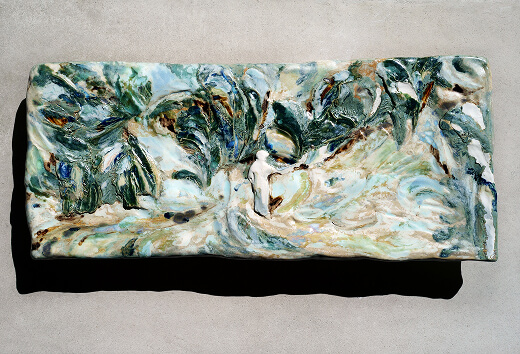 Elena Tutatchikova, Timelines #3, 2025-26,
Ceramic porcelain, glaze, slip, terra sigillata
35×84×5㎝, Collection of the Artist,
Photo: Elena Tutatchikova -
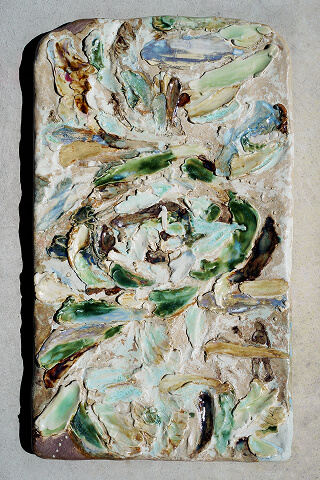 Elena Tutatchikova, Time Spiral, 2025-26,
Ceramic porcelain, glaze, slip, terra sigillata
61.4×35.5×3㎝, Collection of the Artist
Photo: Elena Tutatchikova
In this section, "reading" is understood as an act of engaging with the world through imagination and the body. Elena Tutatchikova expresses thought, imagination, and bodily experience as a single, continuous process.
Walking is one of the essential starting points in her creative practice. As movement opens pathways for thought and a layered sense of time begins to emerge, her movement through the outside world and the quiet hours spent in the studio flow into one another, forming a single rhythm.
In her recent ceramic works, the changing materiality of clay and the layers of color created through glaze take shape, embodying the ongoing circulation between body and thought, and emerge as a tactile encounter with the world.
This installation brings together the new ceramic sculpture series Islands, reliefs, paintings, and drawings, inviting viewers into an experience akin to tracing a map of the imagination.
Elena Tutatchikova
Elena Tutatchikova was born in Moscow. She lives and works in Kyoto. Her practice explores imagination and perception, taking form through ceramics, painting, drawing, and text. In 2020, she obtained a Doctor of Arts in Fine Art at Tokyo University of the Arts, Department of Intermedia Art. Her publications include Paths and I Hear, Says the Wind.
Information
- Exhibition title
-
100th Anniversary of the Tokyo Metropolitan Art Museum
Ways of Reading―How the World Speaks to Us, How We Speak to the World
- Period
- November 19 (Thu), 2026 – January 11 (Mon), 2027
- Venue
- Gallery A, C at Tokyo Metropolitan Art Museum
- Closed
- December 7(Mon), December 21(Mon)-January 3(Sun), 2027
- Hours
- 9:30 - 17:30 (Last admission 17:00), Fridays 9:30 - 20:00 (Last admission 19:30)
- Admission
- Free
- Organized by
- Tokyo Metropolitan Art Museum operated by Tokyo Metropolitan Foundation for History and Culture
- In Cooperation with
- Nikon Corporation, Nikon Imaging Japan Inc.
- Contact
- 03-3823-6921(Tokyo Metropolitan Art Museum)